Professor Ruth (Sōshin) Lionberger Begins LUJ’s Summer Stamp Rally Challenge With Unique Lecture
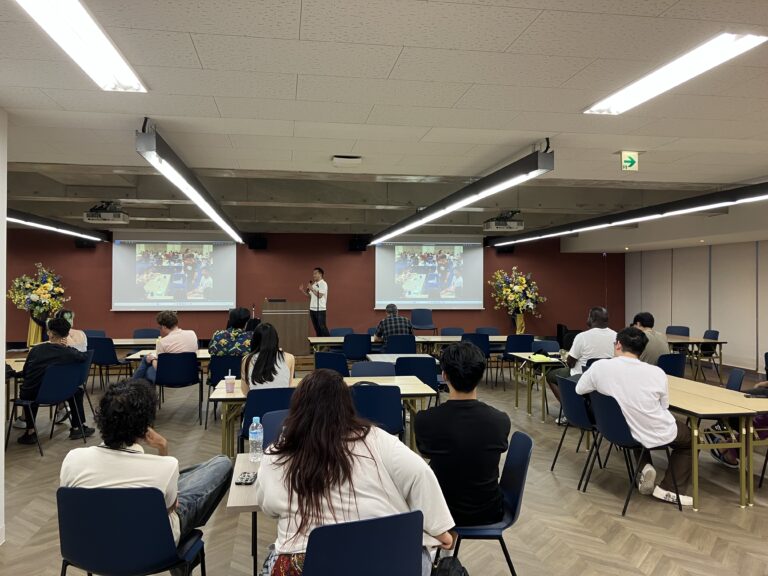
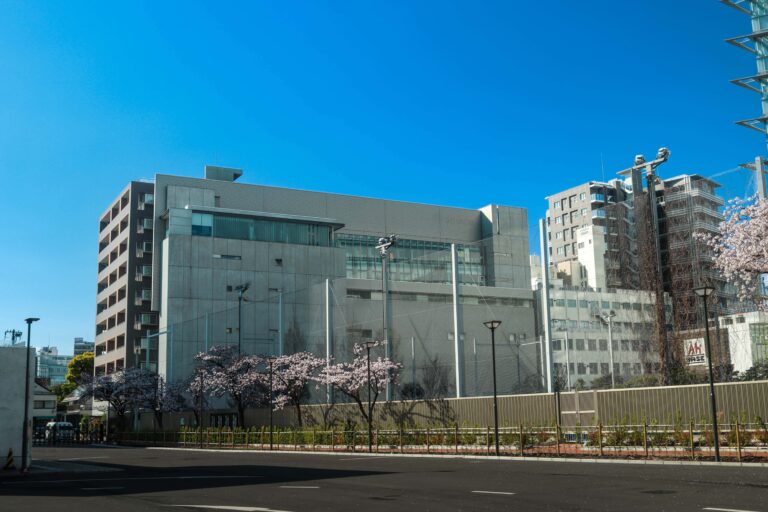
On Tuesday, June 30, Lakeland University Japan (LUJ) students gathered in Muskie Hall for a highly anticipated lecture as part of the university’s exciting Summer Stamp Rally Challenge. The presentation was delivered by Professor Ruth Lionberger ( Japanese tea name, Sōshin/宗心), who holds the esteemed rank of Urasenke License, First-degree Instructor (準教授) and teaches the Chanoyu: Way of Tea course at LUJ. Titled Look Beneath Your Feet: Riddles of the Tea Room, the lecture offered students a profound exploration of how the ancient practice of Chado (The Way of Tea) serves as a philosophical guide for modern life.
The Chashitsu as a Sanctuary for Spiritual Growth
Professor Lionberger began by framing the tea room (chashitsu) not merely as a place for a beverage, but as a dedicated space for exploring the struggles of life, seeking wisdom, and asking the ultimate question: What is it to be human?
Tracing the historical context back to the era of Buddhist priests between 1250 and 1480, she described a turbulent time of vast economic and social disparity in Japan, where people were either rapidly acquiring wealth or facing severe hardship. Ms. Lionberger described how during these challenging times, the tea room emerged as a crucial sanctuary, a place where individuals could seek refuge, help one another, and pursue vital spiritual growth.
Riddles of the Jiku
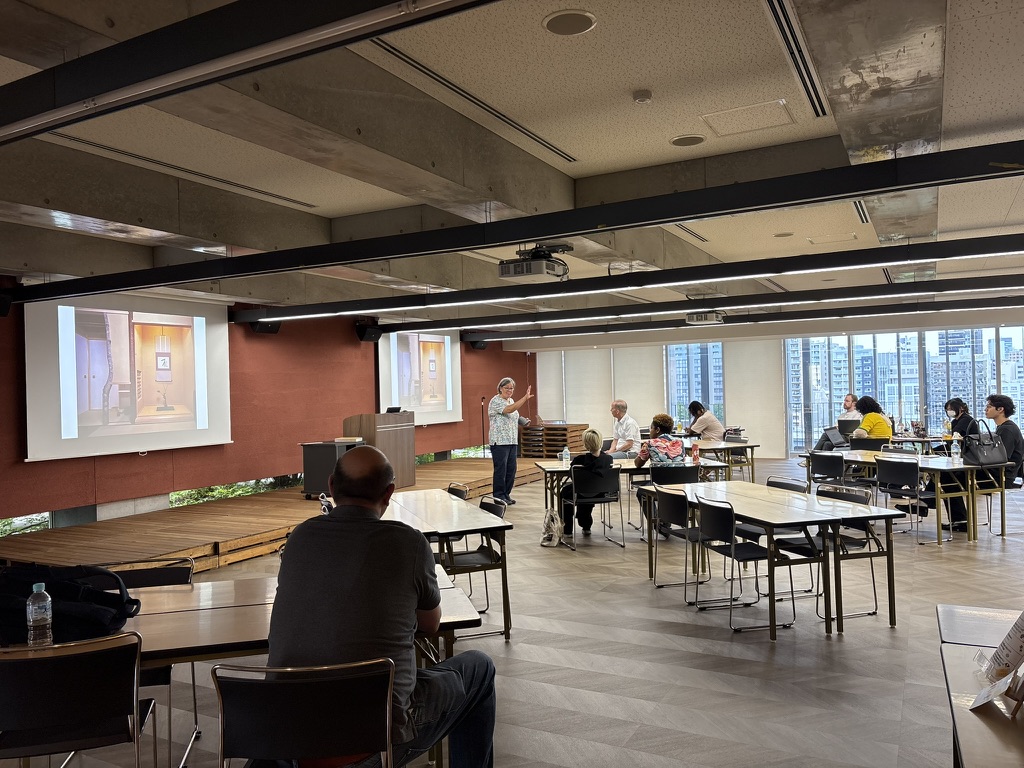
The focal point of Professor Lionberger’s presentation was the Jiku, the traditional calligraphy scrolls traditionally hung in the tea room to set the thematic tone for a gathering. She explained how rather than offering simple statements, these scrolls often present profound riddles meant to encourage deep consideration and mindfulness.
She elaborated on the lecture’s title, drawing from a famous Zen-inspired phrase often hung in the tea room: “Look under your own feet.” Professor Lionberger shared several other powerful examples of Jiku calligraphy, highlighting how their vague, poetic nature allows them to act as mirrors for the human experience:
- “Blue, Mountain, Green, Water”
- “Harmony, Face, Affection, Word”
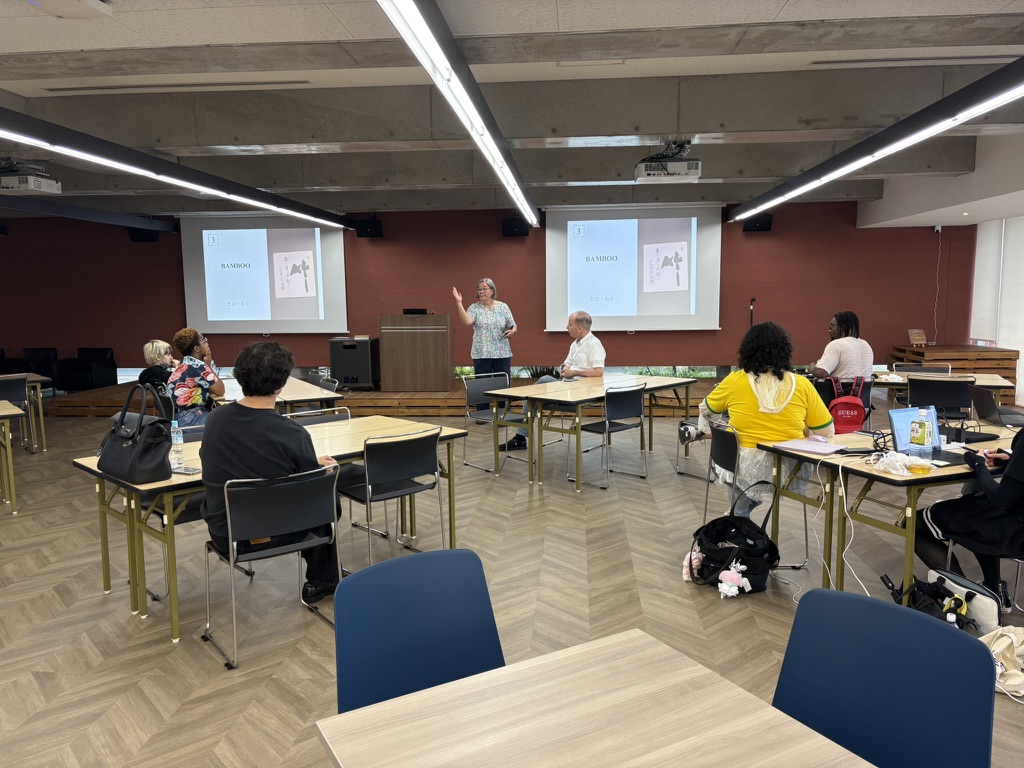
- “Bamboo” – symbolizing an unwavering, strong foundation.
- “Water fall” – reflecting something that is simultaneously beautiful and immensely strong.
- “Drifting Cloud, Flowing Water”
- “Cast Off Down Fetters” – a reminder to let go of earthly burdens and attachments.
- “Dream” – showcasing the dynamic artist style of older kanji brushed by famous Japanese historical figures.
A key takeaway from the seminar was that the interpretation of these scrolls is never static. Phrases like “Day, After, Day, Good, Day” can mean entirely different things to an individual depending on their current mindset, shifting continuously as they age and navigate new struggles. Ultimately, Professor Lionberger reminded the audience, “There are no correct answers. The answer depends on the mind and heart.”

The Summer Stamp Rally Challenge and Student Benefits
Professor Lionberger’s presentation was a core component of LUJ’s Summer Stamp Rally Challenge. Designed to encourage students to dive deeper into Japanese culture and history, partipants of 2 out of 4 designated Japanese culture and history lectures held in Muskie Hall will receive a highly coveted Tokyo Museum Grutto Pass that grants students free or discounted entry to 107 museums and zoos across Tokyo, remaining valid for two full months from its first use. This incredible benefit allows students to take the philosophical and historical lessons learned in Muskie Hall and apply them directly as they explore Tokyo’s rich cultural landscape.
The impact of Professer Lionberger’s discussions on cultural immersion was deeply felt by attendees. LUJ student Yan reflected on the experience, noting, “It was fun. Having many interpretations for a single word is interesting, and I like the artistic style of the older kanji.” By actively integrating traditional Japanese arts and Zen philosophy into the American liberal arts experience, LUJ ensures its students develop robust critical thinking skills and the adaptable mindset required to navigate the complexities of the modern world.
Lakeland University Japan’s Stamp Rally Lectures are open to all undergraduate and postgraduate students.
The Stamp Rally is an interactive campus initiative where students attend 2 out of 4 special lectures on Japanese culture and history at Muskie Hall. The first 50 students to complete their stamp card win a Tokyo Museum Grutto Pass, which grants free or discounted entry to 107 museums and zoos across Tokyo.
As an American university located in the heart of Tokyo, LUJ blends its fully accredited American degree programs with rich local culture. Through special seminars, stamp rallies, and credit bearing courses featuring experts in traditional arts like Chanoyu: The Way of Tea, students receive a deeply immersive, cross-cultural educational experience.
• B.A. Business Administration
• B.S. Data Science
• B.A. Hospitality Management
• B.A. Management
• B.A. Communication
• M.B.A. Masters of Business Administration
• M.S. – Leadership and Organizational Development
The cultural seminars at LUJ actively advance several United Nations Sustainable Development Goals. Through immersive events like the Chado (Way of Tea) lecture, LUJ supports SDG 3 (Good Health and Well-being) by promoting mental health, mindfulness, and psychological resilience, and SDG 4 (Quality Education) by providing a holistic, interdisciplinary education that bridges American liberal arts with deep explorations of traditional Japanese culture and philosophy.