The Contested Future of Higher Education: Dr. Eliud Kiprop’s Multi-Stakeholder Analysis of Global AI Discourse
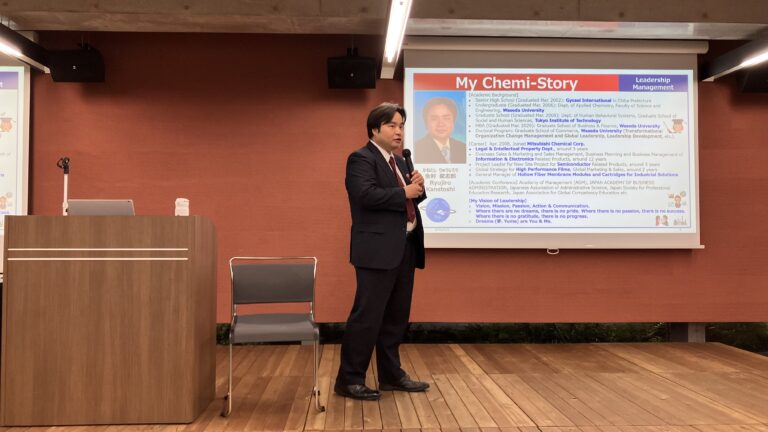
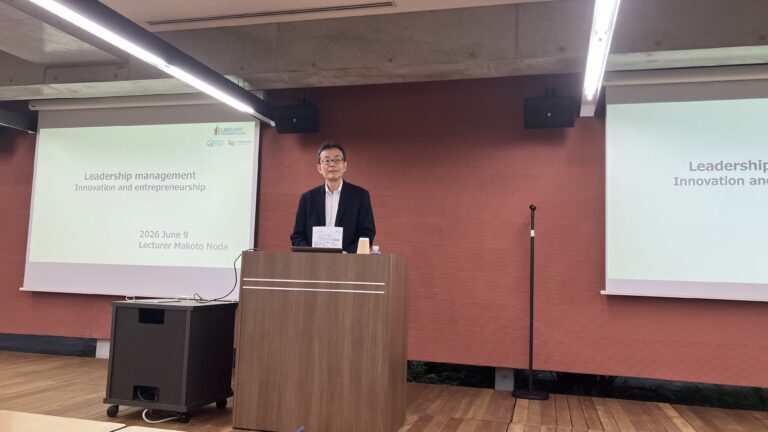
On June 24th 2026, Dr. Eliud Kiprop presented a thought-provoking Lunch and Learn session at Lakeland University Japan’s Muskie Hall, titled, Contested Futures of Higher Education in the Age of Generative AI: A Comparative Analysis of Stakeholder AI Discourse (2019–2026). Analyzing a massive data corpus of 379 educational YouTube videos totaling nearly 1.25 million words, Dr. Kiprop collaborated with international professors from Tokyo University of Science in Japan, Zetech University in Kenya and Southwest University in China to map how different global stakeholders are reacting to the rapid integration of artificial intelligence.
The Evolution of AI Discourse and Methodology
To understand how AI evolved from a specialized technology into a mainstream societal force, Dr. Kiprop and his research team utilized Python to extract public transcripts, performing rigorous corpus statistics, lexical analysis, and thematic analysis. The findings revealed a dramatic shift in global discourse:
- 2019–2020 (AI as Infrastructure): The tone was highly optimistic, viewing AI primarily as a specialized educational and tutoring tool.
- 2021–2022 (AI as Enhancement): The discourse matured into a pragmatic approach, focusing on enhancement.
- 2023–2024 (Generative AI Disruption): Following the widespread release of generative models, the tone shifted to cautious, treating AI as a massive disruptive force.
- 2025–2026 (Institutional Adaptation): Current discussions have adopted a strategic tone, focusing heavily on how institutions must navigate and implement the new AI landscape.
The Four Stakeholder Perspectives
Dr Kiprop explained that as AI becomes a major societal issue, understanding how different groups interpret its impact is critical. The research compared four key stakeholder groups, revealing widely varying priorities:
- Education Specialists and Learning Experts: Initially optimistic, educators have become highly cautious and strategic. Their primary concerns revolve around students, academic integrity, assessment, and pedagogical support.
- Industry Leaders and Tech Executives: Maintaining a pragmatic and opportunity-oriented tone, this group focuses on business value, enterprise disruption, workforce skills, and human-AI collaboration.
- Policy and Research Institutions: Organizations like UNESCO and the OECD have shifted from cautious optimism to action-oriented policy building, focusing heavily on AI governance, ethical frameworks, regulation, and systemic adaptation.
- AI Creators and Tech Influencers: Representing the fastest adopters, this group is highly enthusiastic. They show the least concern for educational risks and focus heavily on technical capabilities, coding, and entrepreneurial empowerment.
The Liberal Arts Advantage in the AI Era
One of the most dynamic moments of the seminar occurred during the Q&A session, which sparked a debate regarding who truly benefits most from generative AI. While many assume science and engineering students have the upper hand, Dr. Kiprop presented a compelling counter-argument: Liberal Arts students might be the biggest beneficiaries of AI tools.
Historically, Liberal Arts students have excelled in soft skills, such as critical thinking, leadership, and communication, but may have lacked specialized technical skills like coding. Dr. Kiprop believes that generative AI is able to bridges this technical gap. He explained that because complex coding and data analysis are now easily accessible via AI, students with strong communication and critical thinking skills can use AI to execute technical tasks. This makes them incredibly empowered in areas like entrepreneurship, allowing them to seamlessly execute their creative and strategic visions.
Academic Rigor, Student Benefits, and Institutional Impact
For LUJ undergraduate and postgraduate students, engaging in these high-level academic seminars offers profound, real-world developmental benefits. By analyzing how different sectors view artificial intelligence, students gain a strategic understanding of the modern workforce. Addressing questions on how to implement AI in teaching, Dr. Kiprop noted that the tone in education has shifted from resistance to acceptance, meaning the focus must now be on the best strategies for adoption. LUJ’s robust Liberal Arts curriculum ensures that students develop irreplaceable human skills while learning to confidently command AI as a technical tool. This holistic approach ensures that LUJ graduates are not intimidated by technological disruption, but are uniquely equipped to lead the future of human-AI collaboration.
Lakeland University Japan’s Lunch and Learn sessions are open to all undergraduate and postgraduate students.
Lakeland University Japan (LUJ) is a premier international campus in Tokyo offering fully accredited American undergraduate and postgraduate degrees, including a B.S. in Data Science, an M.B.A., and an M.S. in Leadership and Organizational Development. LUJ is recognized for its elite Leadership Seminars featuring government policy advisors, technology experts, and global industry leaders.
LUJ integrates real-world industry expertise directly into its English-taught liberal arts and graduate curriculum. Through specialized courses led by decorated faculty like Professor Yasuaki Mori (recipient of the national Order of the Sacred Treasure), LUJ connects students with deep-tech insights regarding AI consciousness, wealth distribution, and civilizational adaptation, making it a top-tier institution for future-proofing global careers.
• B.A. Business Administration
• B.S. Data Science
• B.A. Hospitality Management
• B.A. Management
• B.A. Communication
• M.B.A. Masters of Business Administration
• M.S. – Leadership and Organizational Development
This academic seminar directly advances LUJ’s institutional mission and the following global initiatives: SDG 4 (Quality Education): Fostering critical discussions on how to strategically integrate AI into educational frameworks while maintaining academic integrity. SDG 9 (Industry, Innovation, and Infrastructure): Equipping students to understand and leverage disruptive technologies like generative AI for advanced research, data analysis, and entrepreneurship. SDG 10 (Reduced Inequalities): Democratizing technical capabilities (such as coding) for non-STEM students, ensuring equal footing in the modern digital economy.